

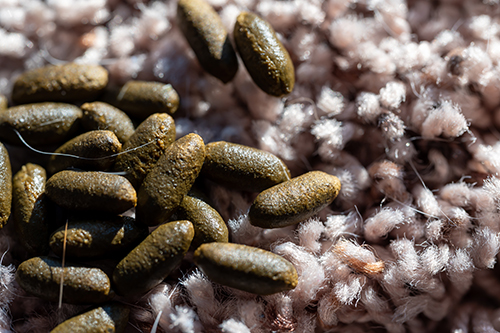
What Does Rat Poop Look Like?
Finding strange droppings around your home? Wondering what does rat poop look like? Spotting rodent droppings is often the first sign of a serious infestation. Rat droppings can carry diseases and cause significant damage if left untreated. In this guide, we’ll show you how to recognize rat poop, what steps to take next and when to call a professional for rodent infestation cleanup.

What Does Rat Poop Look Like?
| Feature | Description |
| Shape | Spindle-shaped, like a capsule |
| Size | About ¼ to ½ inch long |
| Color | Dark brown or black when fresh, turning gray as it ages |
| Texture | Moist and soft when fresh; dry and crumbly when old |
Rat droppings also produce a strong, musky odor that can be overwhelming in enclosed spaces. If you notice a bad smell along with droppings, it’s a sign that the infestation is active. Check out our blog on “how to get rid of rat urine smell” for more information.
How Can You Tell if Rat Poop is Fresh or Old?
- Fresh droppings: Dark, moist, soft texture.
- Old droppings: Gray, dry, dusty, and crumbly.
Tip: If you crush it with a gloved hand and it crumbles easily, it’s old.
How Does Rat Poop Compare to Other Pest Droppings?
If you’re wondering whether you’re dealing with rats or another pest, here’s a simple comparison guide.
| Animal | Size | Shape | Key Features |
| Rat | ¼ to ½ inch | Capsule-shaped | Dark, thick, blunt ends |
| Mouse | About ¼ inch | Thin, pointed ends | Smaller and more pointed |
| Squirrel | ⅜ inch or larger | rounded, barrel-shaped | Often lighter brown in color |
| Bat | ¼ to ½ inch | Similar to grains of rice | Crumbly, breaks easily, found in piles under roosts |
Where is Rat Poop Usually Found?
Rat droppings are commonly found:
- In attics, basements, and crawl spaces
- Behind appliances and furniture
- Along walls and baseboards
- Near food sources like pantries and kitchens
Important: Rats can leave behind 40-50 droppings every single night, so finding a significant amount in one area signals an active infestation.

What Diseases Can You Get From Rat Poop?
Rat droppings aren’t just disgusting, they’re dangerous. Exposure can cause serious illnesses such as:
- Hantavirus Pulmonary Syndrome (through inhalation of particles)
- Leptospirosis (through contact with contaminated water)
- Salmonella (through contaminated food)
- Rat-Bite Fever (through direct or indirect contact)
These diseases can be severe if not treated properly.
How Do You Clean Up rat waste safely?
Proper cleanup is critical to protect your health:
- Ventilate the Area: Open doors and windows for 30 minutes before cleaning.
- Protect Yourself: Wear gloves, a mask, and goggles.
- Disinfect First: Spray droppings with a bleach solution (1 part bleach to 10 parts water).
- Pick Up Carefully: Use paper towels to collect droppings. Never sweep or vacuum droppings — this spreads dangerous particles in the air.
- Disinfect Again: Thoroughly clean the area once the droppings have been removed.
- Dispose Properly: Double-bag droppings and cleaning materials and throw them away securely.

Why Should You Call a Professional for Rodent Infestation Cleanup?
Cleaning rat droppings yourself can be dangerous. Hiring professionals like Attic Cleanup ensures:
- Complete removal of contaminated materials
- Full disinfection using professional-grade equipment
- Air scrubbing to eliminate airborne contaminants
- Inspection and sealing of rodent entry points to prevent future infestations
We have the experience, tools, and protective gear needed to handle rodent contamination safely and thoroughly.
What Should You Do if You Find Rat Poop?
- Don’t ignore it. Even a few droppings indicate a bigger problem.
- Avoid disturbing it. Don’t sweep or vacuum.
- Call a professional. Fast, expert cleanup prevents health risks and future infestations.
Attic Cleanup offers safe, thorough rodent infestation cleanup services. We eliminate the health hazards, disinfect the space, and rodent-proof your property to keep you safe. Contact us today for a professional rodent infestation cleanup and attic restoration.

Your Local Attic Cleanup Specialist,
Michael Koski 
Owner & President | Get Bats Out Attic Cleanup



Comments 0