

How to Identify Squirrel Poop in the Attic
If you’ve found droppings and suspect squirrel poop in the attic, this guide will help you identify squirrel poop, understand the health risks, and learn how attic cleanup professionals can help.
What does squirrel poop in the attic look like?
Squirrel poop is often confused with rat or mouse droppings, but there are a few details that set it apart:
Size: ½–¾ inch long, similar to small grains of rice, slightly larger than mouse droppings but smaller than rat feces.
Shape: Cylindrical with rounded ends, slightly curved.
Color: Dark brown to black when fresh; dusty gray when old and dried, especially in warm, dry environments like attics.
Texture: Fresh droppings may be moist. Old droppings are hard, brittle, and may crumble into powder.
Unlike rat poop, which is more pointed at the ends, squirrel feces tend to be thicker and blunter. Squirrels’ droppings are generally more uniform and found in scattered or clustered piles, not as widely spread as rats might leave them.

Where Are Squirrel Droppings Usually Found in the Attic?
Squirrel droppings typically show up in the areas where they live, eat, and nest. Look in these typical hotspots:
- Near entry points, such as holes in soffits, roof vents, and gable vents.
- Around food stash sites, like insulation or stored fabrics.
- On beams, rafters, or HVAC ducts where squirrels travel.
- Near the attic floor or insulation, where they rest.
If you see multiple droppings in the same area, there’s a high chance the squirrels are living — or have lived — there for some time. Dozens of droppings across rafters or insulation likely signal regular squirrel use, not just a passing animal.
What are the health risks of squirrel poop in the attic?
Key dangers:
- Salmonella & bacterial contamination – Contact or airborne dust can carry pathogens.
- Respiratory irritation – Dust from droppings can trigger asthma or allergies.
- Parasites & fleas – Squirrel feces often contain parasites, fleas, mites, or other parasites.
- Hantavirus risk (rare) – Though more common with rodents, contaminated droppings can present risks.
- Odor and contamination – Urine and feces can seep into insulation and wood, creating lasting smells and stains.
Even if the droppings appear old or dried out, health risks can still be present — especially in closed spaces like attics, where air circulation is limited.

How to clean squirrel feces safely from attic areas
Cleaning squirrel poop incorrectly can make the situation worse. Always follow safety procedures or call professionals for help.
Safe Cleaning Steps:
- Protect yourself:
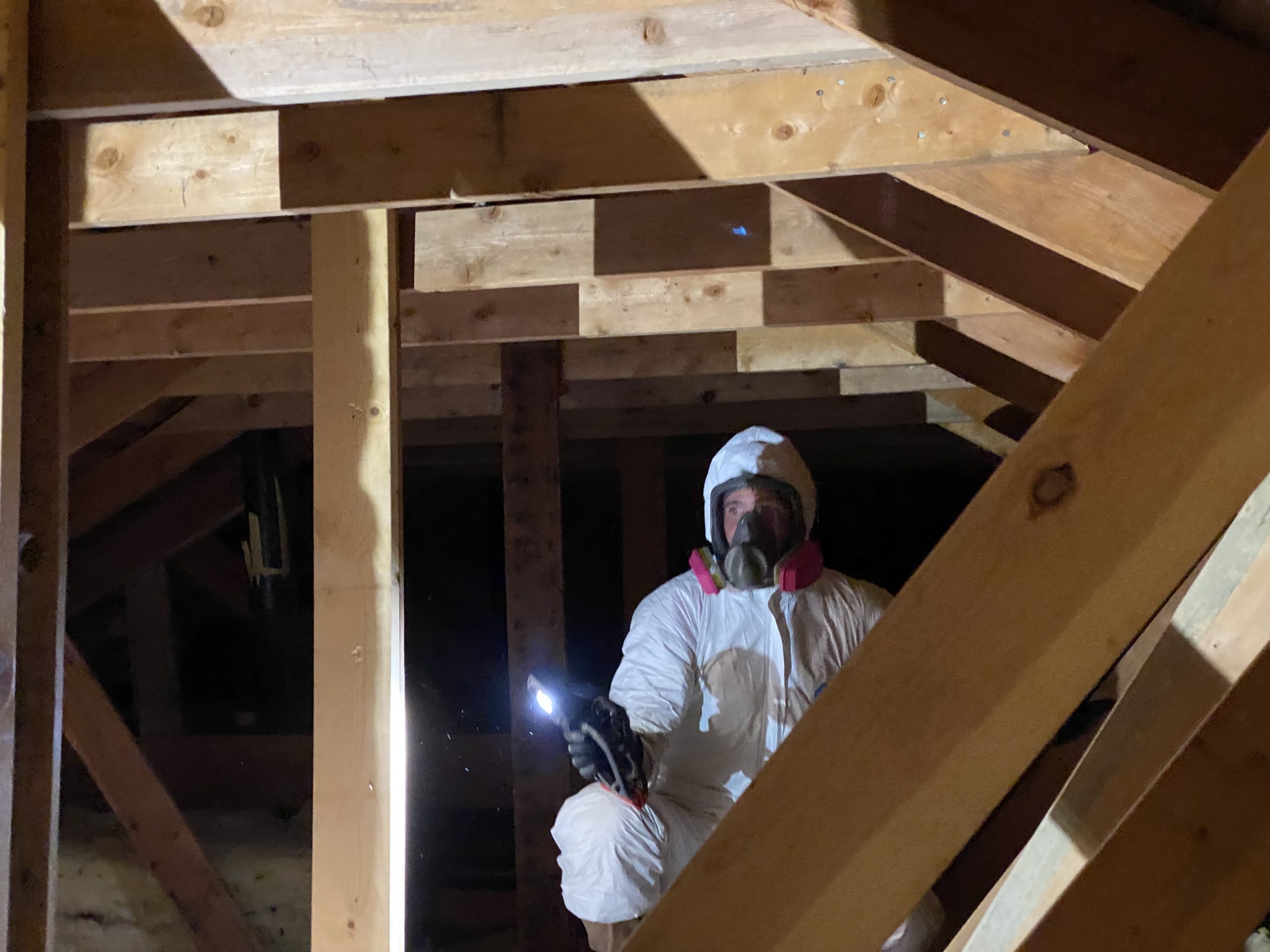
Wear disposable gloves, an N95 or P100 mask, eye protection, and a full-body protective suit.
- Ventilate space:
Open windows or vents before you start cleaning to let air flow through.
- Dampen the droppings:
Lightly spray the droppings with water and disinfectant to prevent dust accumulation.
- Remove carefully:
Scoop droppings and soiled insulation or debris into sealed plastic bags.
- Disinfect surfaces:
Apply a disinfectant, such as a bleach solution or enzyme cleaner, and let it sit as directed.
- Dry out area:
Use fans or dehumidifiers to dry the attic thoroughly.
- Inspect for damage or contamination:
Check insulation, wiring, and vents. Contaminated insulation should be removed and replaced with new insulation.
- Dispose properly:
Seal bags and dispose of them. Ensure compliance with local disposal regulations. Wash gloves, mask (if reusable), and hands thoroughly.
Why You Shouldn’t Skip Attic Cleanup After a Squirrel Infestation
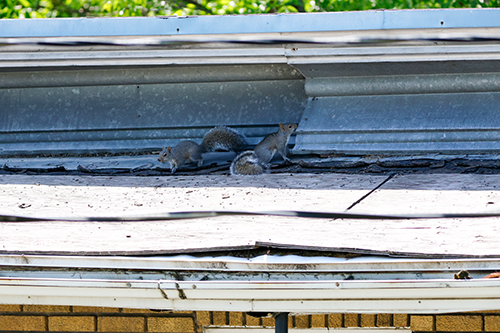
Even after squirrels leave, their droppings and urine don’t. Failing to clean your attic can lead to serious consequences, including:
- Persistent odor and stains that seep into insulation and wood
- Mold and mildew growth due to moisture and contamination
- Attracting other pests, like insects or rodents, drawn by leftover feces
- Electrical hazards if squirrels chewed wires
- Reduced insulation performance from soiled or flattened materials
- Health risks from lingering bacteria, allergens, and airborne particles
Leaving it untreated creates long-term problems that cost more to fix later. That’s why a thorough attic cleanup is critical.
Can you remove squirrel poop yourself, or should you call professionals?
You can attempt to clean squirrel poop yourself, but keep these considerations in mind:
| DIY Cleanup | Professional Attic Cleanup |
| Low cost | Safer, faster, and more thorough |
| Risk of missing hidden droppings | Full attic inspection included |
| Health hazards if done incorrectly | Proper PPE and sanitation procedures |
| Time-consuming | One-time visit, no mess left behind |
Old feces may leave dark stains and hardened residue, which is often best removed by professionals. If there’s a lot of droppings, signs of nesting, or damaged insulation, hiring professionals is the wise choice.
What a Professional Attic Cleanup Service Includes
When you hire attic cleanup professionals, you’re not just getting a cleaning — you’re getting full restoration. Here’s what to expect:
- Conduct a thorough inspection and identify entry points
- Safely remove droppings, nesting materials, and contaminated insulation
- Sanitize all affected surfaces, beams, and ducts
- Replace insulation where necessary
- Seal openings and repair roof or vent damage
- Provide post-cleanup testing and monitoring
This full-service approach ensures your attic is clean, safe, and squirrel-proof.
How to prevent squirrel poop from coming back?
After cleanup, make sure your attic stays squirrel-free. Here are preventive steps:
- Inspect and repair or seal holes or gaps on roof vents, soffits, gable vents, and gaps larger than ¼ inch.
- Install hardware cloth or metal flashing over weak points.
- Trim vegetation and tree branches 6–8 feet close to your roofline.
- Store food, seeds, and pet food in sealed containers.
- Schedule regular attic inspections.
Taking these steps reduces the chance of future infestations and keeps your attic safe.
Get Help from the Attic Cleanup Experts
Squirrel poop in the attic isn’t just a mess — it’s a health hazard. From airborne bacteria to chewed wires and ruined insulation, the damage can get worse fast.
Let Attic Cleanup handle it all: safe removal, deep sanitizing, insulation replacement, and sealing entry points to prevent squirrels from returning.
Book your attic inspection today and protect your home from the hidden dangers of squirrel contamination.
Your Local Attic Cleanup Specialist,
Michael Koski 
Owner & President | Get Bats Out Attic Cleanup


Comments 0