

How Long Are Mouse Droppings Dangerous?
If you’ve recently discovered mouse droppings in your home or attic, a natural question is: how long are mouse droppings dangerous? Whether you’re a homeowner or a property manager, understanding the health risks and how long they remain harmful is key to keeping your property safe. Here’s what you need to know: Mouse droppings can remain dangerous for weeks, even after they dry, due to lingering bacteria and viruses that can become airborne when disturbed.
Are Mouse Droppings Still Dangerous After They Dry?
Yes. Mouse droppings remain dangerous even after they dry out. The viruses and bacteria they carry, such as Hantavirus or Salmonella, can become airborne when disturbed, even weeks or months after the droppings have dried. Simply vacuuming or sweeping can release contaminated particles into the air.
What Happens If You Breathe In Dust from Mouse Droppings?
Breathing in dust contaminated by mouse droppings can lead to serious illnesses. This is how many people unknowingly get exposed to:
- Hantavirus Pulmonary Syndrome (HPS)
- Lymphocytic Choriomeningitis Virus (LCMV)
- Respiratory complications from airborne bacteria
Dust stirred up from dry droppings, especially in attics or crawl spaces, is one of the biggest health risks.


How Long Can Bacteria and Viruses in Mouse Droppings Survive?
While it varies depending on temperature and humidity, here’s a general idea:
| Virus/Bacteria | Survival Time in Droppings |
| Hantavirus | Up to 2-3 weeks in dried droppings |
| Salmonella | Several months if undisturbed |
| Lymphocytic Choriomeningitis Virus (LCMV) | Several Days |
The bacteria and viruses in mouse droppings can linger on surfaces and in air ducts far longer than most people realize.
How Do I Know If the Droppings Are Old or Recent?
- Fresh droppings: Dark, shiny, soft
- Old droppings: Gray, dry, and brittle
Even if the droppings look old, they can still release dangerous particles when disturbed. Don’t assume “old” means safe.
Can You Get Sick From Cleaning Up Mouse Droppings?
Yes. Without the proper safety steps, you can get seriously ill while cleaning up even a small amount of droppings. Avoid sweeping or vacuuming. That spreads dangerous dust into the air. Mouse droppings and urine also produce a foul odor that can irritate your respiratory system and make you feel sick. Check out our blog on how to get rid of mouse smell for safe and effective odor removal.

Where Are Dangerous Droppings Most Likely to Be Hidden?
Mouse droppings often remain hidden in areas like:
- Insulation in attics or walls
- Under old boxes in garages or storage units
- Beneath appliances or behind cabinets
- Air ducts and vents
These places are dry, dark, and undisturbed — perfect for lingering contaminants.
What’s the Safest Way to Remove Mouse Droppings?
- Open windows and ventilate the space for 30+ minutes.
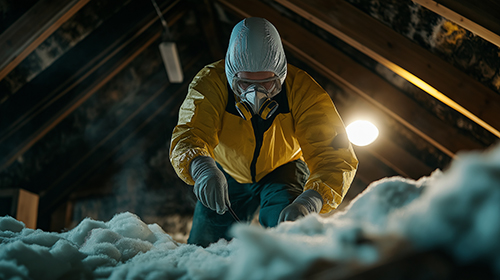
- Wear protective gear: gloves, goggles, and an N95 mask.
- Spray droppings with disinfectant or bleach solution (1:10 ratio).
- Wipe with paper towels — never sweep or vacuum.
- Seal waste in double plastic bags and dispose of them.
- Disinfect again after removal.
Is It Better to Hire a Professional?
In many cases, yes. Professional rodent infestation cleanup is strongly recommended if:
- Droppings are in large quantities or appear old
- They’re located in enclosed areas like attics or walls
- You have respiratory issues or health concerns
Services like Attic Cleanup can:
- Remove hazardous waste thoroughly
- Disinfect using commercial-grade equipment
- Use air scrubbers to eliminate airborne risks
- Seal off rodent entry points to prevent re-infestation
Don’t Wait — Act Early
Mouse droppings don’t become harmless with time. They remain a danger as long as particles can spread.
If you’re unsure how to identify them, check out our last blog: “What Does Mice Poop Look Like?“
And if you suspect droppings are sitting in your attic or vents, contact us for complete rodent infestation cleanup before the danger spreads.
Your Local Attic Cleanup Specialist,
Michael Koski 
Owner & President | Get Bats Out Attic Cleanup



Comments 0