

Should I re-insulate my attic after a rodent infestation?
If you’ve dealt with rats, mice, or other rodents in your attic, you already know how destructive they can be. The scratching, droppings, and odor are bad enough — but what about the damage to your insulation? Should you re-insulate after a rodent infestation? The short answer: yes. Once your attic has been properly cleaned and decontaminated, replacing old insulation with rodent-proof insulation is one of the most important steps you can take. It’s not just about comfort — it’s about safety, health, and preventing future infestations.
Let’s break down exactly why re-insulating matters and what you need to know before you start.

How Do Rodents Damage Attic Insulation?
Before deciding whether to replace insulation, it helps to understand what rodents actually do to it. Unfortunately, it’s more than just a few chew marks.
Rodents are constant chewers and nest builders. They use attic insulation for shelter and warmth. Here’s what typically happens when they move in:
- Contamination: Rodent urine and droppings soak into insulation, spreading parasites and bacteria like Salmonella or hantavirus.
- Odor: The smell from urine and decomposing rodents can linger for months.
- Compaction: Rodents flatten insulation while nesting, which kills its thermal effectiveness.
- Fire risk: Chewed wires hidden in insulation can create serious electrical hazards.
Even if rodents are gone, the insulation they contaminated isn’t safe to keep, which brings us to the next question.
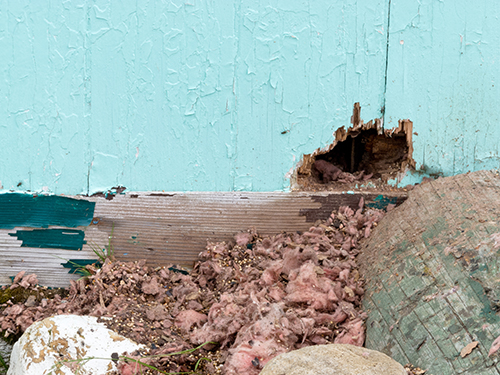
Can I Just Clean My Attic Instead of Replacing the Insulation?
Cleaning is a must — but it’s not enough. Here’s why simple cleanup doesn’t cut it:
- Rodent urine seeps deep into insulation fibers, making it impossible to disinfect completely.
- Droppings release airborne pathogens when disturbed, posing a health risk.
- Odor molecules cling to contaminated insulation and keep the smell circulating through your HVAC system.
If you’ve had a significant infestation, replacing insulation is the only way to fully restore your attic’s air quality and energy efficiency.
What Is Rodent-Proof Insulation?
“Rodent-proof insulation” refers to materials and installation methods that make it harder for pests to chew, nest, or enter. While no insulation is 100% rodent-proof, some types resist damage far better than others.
Best Types of Rodent-Proof Insulation:
| Insulation Type | Rodent Resistance | Pros | Cons |
| Spray Foam | Excellent | Seals gaps, blocks entry points, and has a high R-value | Costlier upfront |
| Cellulose (treated) | Good | Eco-friendly, treated with borate (repels pests) | Can absorb moisture |
| Mineral Wool / Rock Wool | Excellent | Fire-resistant, hard for rodents to chew | Heavier than fiberglass |
| Fiberglass Batts | Poor | Affordable, easy to install | Rodents love nesting in it |
If you want long-term protection, spray foam insulation and mineral wool are the top choices.
How Do You Properly Restore an Attic After a Rodent Infestation?
A complete attic restoration involves more than just removing the old insulation. Professional services (like Attic Cleanup) follow a proven process to make sure your attic is sanitized and rodent-free:
- Inspection: Identify all contamination, nesting sites, and entry points.
- Insulation Removal: Safely vacuum and bag contaminated material using HEPA-filtered equipment to keep harmful particles from spreading through your home.
- Sanitization: Apply professional-grade disinfectant to kill bacteria, viruses, and lingering odors.
- Rodent Proofing: Seal entry holes, cracks, gaps, and vents with metal mesh or foam barriers.
- Install Rodent-Proof Insulation: Use high-quality materials like closed-cell spray foam or treated cellulose.
- Final Inspection: Verify air quality, insulation coverage, and sealing.
This process restores your attic to a clean, healthy condition — and makes it far less attractive to rodents.

What Are the Health Risks of Keeping Contaminated Insulation?
Rodent waste isn’t just unpleasant — it can actually be harmful to your health. When insulation becomes contaminated, it releases tiny airborne particles that can circulate through your home’s air and ventilation system. Breathing in those particles can expose your family to several serious health risks, including:
- Hantavirus Pulmonary Syndrome (HPS): A potentially severe illness that is spread through contact with rodent urine and droppings.
- Salmonella: Bacteria carried in rodent feces that can contaminate food and surfaces.
- Leptospirosis: A bacterial infection transmitted through rodent urine that can cause fever and organ complications.
- Allergies and Asthma: Dust, dander, and dried droppings can trigger or worsen respiratory issues.
If anyone in your household struggles with allergies, asthma, or has a weakened immune system, replacing contaminated insulation isn’t optional — it’s essential for maintaining a safe and healthy living environment.

How Does New Insulation Prevent Future Infestations?
New, rodent-proof insulation can do more than improve comfort — it helps block future invasions. Here’s how:
- Sealed gaps and crevices: Spray foam fills every crack, cutting off entry points.
- Treated materials: Borate-treated cellulose deters insects and rodents from nesting.
- Consistent temperature and dryness: A well-insulated attic reduces moisture — a key attractant for rodents.
Pairing new insulation with professional rodent-proofing creates a long-term defense system for your home.
Will Re-Insulating My Attic Save Energy Too?
Absolutely. This is one thing that most homeowners don’t realize: re-insulating doesn’t just protect your health — it can also lower your energy bills.
Damaged or compacted insulation loses its R-value, which means your home wastes energy. Installing fresh, high-performance insulation can:
- Cut heating and cooling costs by up to 30%.
- Maintain consistent indoor temperatures.
- Reduce humidity and mold risks.
- Extend the lifespan of your HVAC system.
You’re not just fixing a rodent problem — you’re upgrading your home’s efficiency and comfort.

Can I Re-Insulate My Attic Myself?
DIY might seem tempting, but here’s why it’s risky:
- Health hazards: Handling contaminated insulation exposes you to disease.
- Improper sealing: Missing one small entry hole can invite rodents back.
- Waste disposal: Contaminated materials must be disposed of properly according to local regulations.
Professional attic restoration teams have the right equipment, safety gear, and experience to do it right — and keep rodents out for good.
How Do I Keep Rodents Out of My Attic for Good?
Even after installing rodent-proof insulation, consistent maintenance is the key to preventing rodents from coming back.
Here are smart habits to keep rodents out:
- Seal all gaps around vents, soffits, and rooflines.
- Trim trees that touch your roof (rodent highways).
- Store food and pet feed in sealed containers.
- Inspect your attic twice a year for signs of droppings or gnaw marks.
- Schedule regular rodent-proofing maintenance with a professional service.
A little prevention now saves you the headache (and cost) of another infestation later.
Re-Insulating After Rodent Infestation Is a Smart Investment
If rodents have invaded your attic, replacing the insulation isn’t optional — it’s essential. Contaminated insulation compromises your health, comfort, and safety. By choosing rodent-proof insulation and professional attic restoration, you’re investing in a cleaner, more efficient, and pest-free home.
At Attic Cleanup, we specialize in full-service attic restoration — from rodent infestation cleanup and sanitization to installing top-grade rodent-resistant insulation. Our goal is simple: restore your attic and protect your home for years to come.
Need help with attic insulation after a rodent infestation?
Contact Attic Cleanup today for a free inspection and quote. We’ll make sure your attic is clean, insulated, and truly rodent-proof.

Your Local Attic Cleanup Specialist,
Michael Koski 
Owner & President | Get Bats Out Attic Cleanup



Comments 0